Click here for an update on NH state inspections
auto care plus logo
Schedule Service

Services

Serpentine Drive Belt Replacement

One belt drives your alternator, water pump, power steering, and A/C compressor. When it snaps, you lose charging, cooling, and steering assist at the same time — usually miles from anywhere. Auto Care Plus inspects and replaces serpentine belts, tensioners, idler pulleys, and belt-driven accessories across our New England locations. It is a small part with an outsized job.

Schedule Service Now

The Serpentine Belt

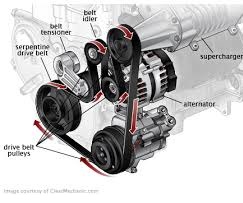
The serpentine belt (click to listen to podcast on this subject), also known as the drive belt or multi-rib belt, is a single, continuous belt used to drive multiple accessory devices attached to the vehicle’s engine. These can include the alternatorpower steering pump, water pump, air conditioning compressor as well as options like superchargers. Without the serpentine belt, there is no way to drive power to any of these devices. A serpentine belt should be replaced as soon as it shows any signs of fraying, is cracked or gets contaminated with oil.

When Should you Replace your Serpentine Belt?

Most manufacturers recommend replacement every four (4) years or 50,000 miles as preventative maintenance. Especially in climates like here in New England where we experience extreme temperature variations. When a serpentine belt breaks, all drive power to whatever it turns is lost. This means the water pump stops circulating coolant through the engine, the alternator quits producing power and no longer is charging the vehicle’s battery, the power steering pump ceases to assist in the steering of the vehicle, and the air conditioner quits cooling and dehumidifying the windshield. Continued driving without power to your water pump will result in engine overheating and engine failure, requiring costly repairs and possibly even engine replacement. Ignoring serpentine belt replacement has a high safety impact, as you will lose the ability to steer the vehicle. You will most likely be stranded with no warning when the belt breaks. When replacing the serpentine belt it is highly recommended that we replace the belt tensioner at the same time as these hold spring pressure on the belt keeping it in place. These tend to weaken over time and mileage and need to be replaced periodically as well.
DID YOU KNOW?

20 percent of vehicles on the road today need a serpentine belt replacement. A worn belt can not only break without warning, it can slip and damage important engine accessories. Have your belt inspected and replace it if it is worn or damaged. You’ll be glad you did.

Check your owner’s manual and ask an Auto Care Plus ASE certified technician about the service life of your vehicle’s serpentine belt. We would be happy to look up the manufacturer’s recommended service schedule on our ALLDATA computer system free of charge. Serpentine drive belts should be replaced BEFORE the suggested service life of this critical component ends.

Frequently Asked Questions

How often should a serpentine belt be replaced?

Most serpentine belts last 60,000 to 100,000 miles, but modern EPDM rubber belts often fail without the obvious cracking older belts showed. We inspect the belt at every service and use a wear gauge where appropriate rather than guessing.

What happens if the serpentine belt breaks while driving?

You lose the alternator, so the car runs on battery alone and will die within minutes. You also lose power steering assist and, on most vehicles, the water pump — so the engine begins overheating immediately. It is a breakdown, not an inconvenience, and it usually happens at the worst possible moment.

Why is my belt squealing?

Squealing is most often a slipping belt, caused by a weak tensioner, a glazed or worn belt, a misaligned pulley, or fluid contamination from an oil or coolant leak. Simply replacing the belt without finding the cause means the noise comes right back.

Do I need to replace the tensioner with the belt?

Not always, but often. The tensioner has a spring and a bearing, and both wear out on roughly the same timeline as the belt. Replacing a worn tensioner at the same time is cheap insurance against a repeat failure — and against being stranded.

Is a serpentine belt the same as a timing belt?

No, and the difference matters. The serpentine belt is on the outside of the engine and drives accessories. The timing belt is inside the engine and keeps the valves synchronized with the pistons; if it breaks, it can destroy the engine.

Can I keep driving with a cracked belt?

We would not recommend it. Once a belt shows significant cracking or missing ribs, it is in the failure window, and it will not give you warning before it lets go. Replacing it on your schedule is far cheaper than replacing it on the side of the highway.

Signs you need this service:

  • Squealing or chirping from the engine, especially on startup or in damp weather
  • Visible cracks, glazing, fraying, or missing ribs on the belt
  • Battery or charging system warning light
  • Loss of power steering assist
  • A/C stops blowing cold
  • Engine overheating
  • Slapping, rattling, or grinding from the belt area
  • Belt appears loose or is riding off-center on a pulley

Our process:

  • Inspect the belt for cracking, glazing, fraying, and missing ribs
  • Check the tensioner for correct tension, smooth movement, and play
  • Spin idler pulleys and accessory pulleys to check for bearing noise or wobble
  • Inspect the pulley alignment and check for contamination from fluid leaks
  • Review findings and recommend belt, tensioner, or pulley replacement as needed
  • Route and install the new belt exactly to the manufacturer's diagram
  • Replace the tensioner or idler pulleys if worn — they are the most common cause of repeat belt failure
  • Start the engine and verify the belt tracks correctly with no noise
  • Confirm charging, steering, and A/C operation

Learn more: