
Click here for an update on NH state inspections
auto care plus logo
Schedule Service

Services

Check Engine Light Diagnostics

A check engine light means your vehicle's computer has stored a fault code — but a code is a clue, not a diagnosis. Auto Care Plus uses professional scan tools, live data, and factory service information to find the actual root cause instead of guessing at parts. Accurate check engine light diagnostics at our New England shops mean you fix it once.

Schedule Service Now

Check Engine Light (CEL)
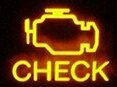
Your Check Engine Light (CEL) warns you that your vehicle’s computer detected a malfunctioning component in your vehicle which is causing excessive emissions pollution. You may see “check engine,” “service engine soon,” or “check powertrain.” Or, the light may show an engine picture, perhaps with the word “Check.” To determine the actual problem, we use an electronic scan tool or a diagnostic computer to retrieve Diagnostic Trouble Codes (DTC).

Common Cases of CEL Turning On

Some common issues that turn on the check engine light include:

  • Your gas cap isn’t on tight enough; we suggest checking before calling us.
  • Your engine ingested water somewhere
  • The spark plugs are not functioning correctly
  • Your vehicle is misfiring (this one can destroy your catalytic converter very quickly)
  • Your vehicle is emitting high levels of pollutants
  • Transmission Issues (believe it or not a transmission fault causes the engine light to come on)

In any case, you should bring your vehicle to us, and we can inspect your vehicle, diagnose the problem, and take care of it. Ignoring your engine light can cause serious problems with your car in the long run damaging very expensive components leading to very costly repairs.

Make an Appointment

A check engine light appointment goes pretty fast, so stop by or give us a call. It’s best to catch any issue too early, than too late. Schedule an appointment by clicking the button below.

C.E.L. Video Explanation

Frequently Asked Questions

What does the check engine light actually mean?

It means the engine control module detected a value or condition outside its expected range and stored a fault code. That could be anything from a loose gas cap to a failing catalytic converter. The light tells you something is wrong; it does not tell you what.

Is a flashing check engine light different from a solid one?

Very much so. A solid light means a fault is stored and should be diagnosed soon. A flashing light means an active misfire that is dumping raw fuel into your exhaust and is actively destroying your catalytic converter. Reduce speed, avoid hard acceleration, and get it in immediately.

Can I just get the code read for free at a parts store?

You can, and a free code read tells you which code is stored. But a code like P0171 says the engine is running lean — it does not say whether that is a vacuum leak, a dirty mass airflow sensor, a weak fuel pump, or a bad oxygen sensor. Replacing parts based on a code alone is how people spend hundreds of dollars and still have the light on.

Can I keep driving with the check engine light on?

If the light is solid and the car drives normally, you can usually drive it short-term, but you are gambling. Some faults are minor; others quietly destroy expensive components. If the light is flashing, or you notice performance problems, stop driving and get it in.

Will the light turn off by itself?

Sometimes. If the fault was intermittent — a loose gas cap, for example — the light may clear itself after several successful drive cycles. But the code stays stored in memory, and if the underlying condition returns, so does the light.

Why does the light come back on after a repair?

Usually because the original repair addressed the code rather than the cause. Replacing an oxygen sensor because a code named it will not help if the real problem was a vacuum leak making the sensor read lean. Correct diagnosis is what prevents the repeat visit.

Why do you charge for diagnostics?

Because diagnosis is skilled work with expensive equipment, and it is the part of the job that determines whether your money is well spent. A proper diagnosis takes time, factory information, and a technician who knows how to test rather than guess — and it is the single best value in auto repair, because it prevents you from paying for parts you never needed.

Signs you need this service:

  • Check engine light illuminated on the dash
  • Check engine light flashing (this is urgent)
  • Rough idle, hesitation, or misfire
  • Loss of power or reduced engine performance
  • Noticeable drop in fuel economy
  • Hard starting or stalling
  • Vehicle in limp or reduced-power mode
  • Unusual smells, smoke, or noises
  • Failed emissions or state inspection

Our process:

  • Retrieve all stored, pending, and history codes from every module
  • Record freeze-frame data to see the conditions when the fault occurred
  • Review live sensor data and fuel trims while the engine runs
  • Research known issues, technical service bulletins, and factory diagnostic procedures
  • Perform targeted testing — pressure, voltage, smoke, or scope testing as the fault requires
  • Isolate the actual root cause, not just the component the code names
  • Review findings with you and provide a written estimate
  • Perform the approved repair
  • Clear codes and run the vehicle through the drive cycle to verify readiness monitors
  • Confirm the light stays off and the fault does not return

Learn more: